3. Bundles
A bundle is Django's Group: permissions given together. Each permission in
it carries a scope - which rows it reaches. A person holds what their
bundles give.
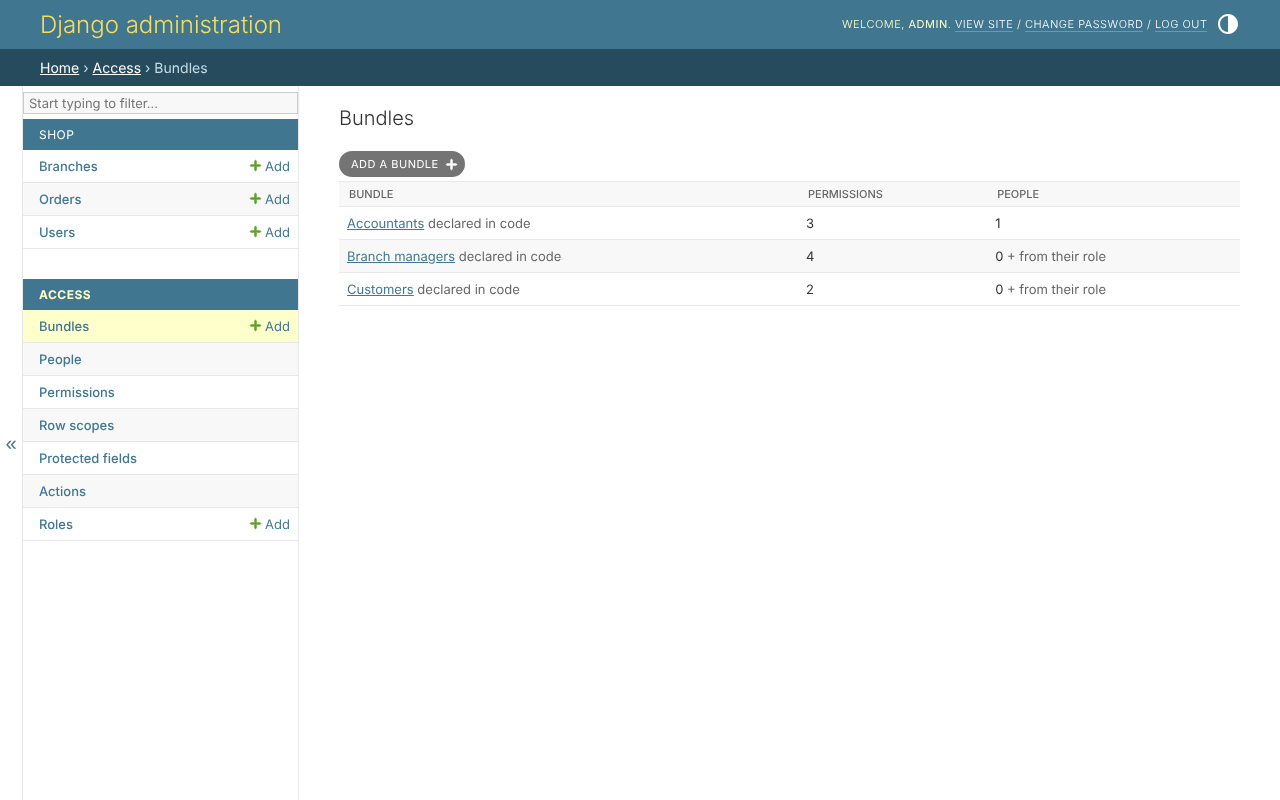
The list
Access, Bundles:
One bundle
A bundle is a grid: a model in each row, an action in each column, and a
scope beside each permission given. The shop's Branch managers gives
view, edit, approve and print_invoice on orders, each in Their
branch's orders:
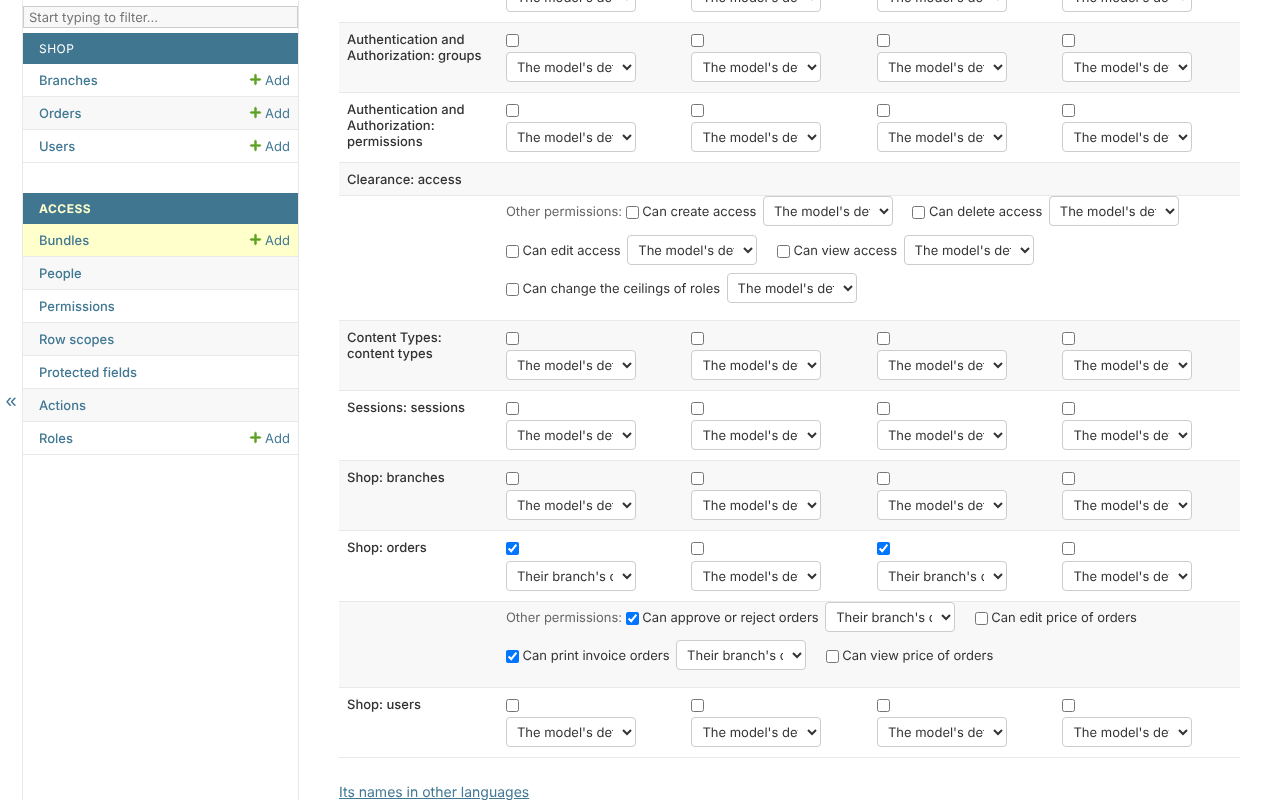
An action the four columns do not hold - approve, the price, an action
found in the code - is under Other permissions, on the model's own line.
Below the grid, the page lists who holds the bundle.
One person
Access, People, and a person: their roles, their bundles, their own grants, what was taken away from them - and what they end up allowed, with where each permission came from:
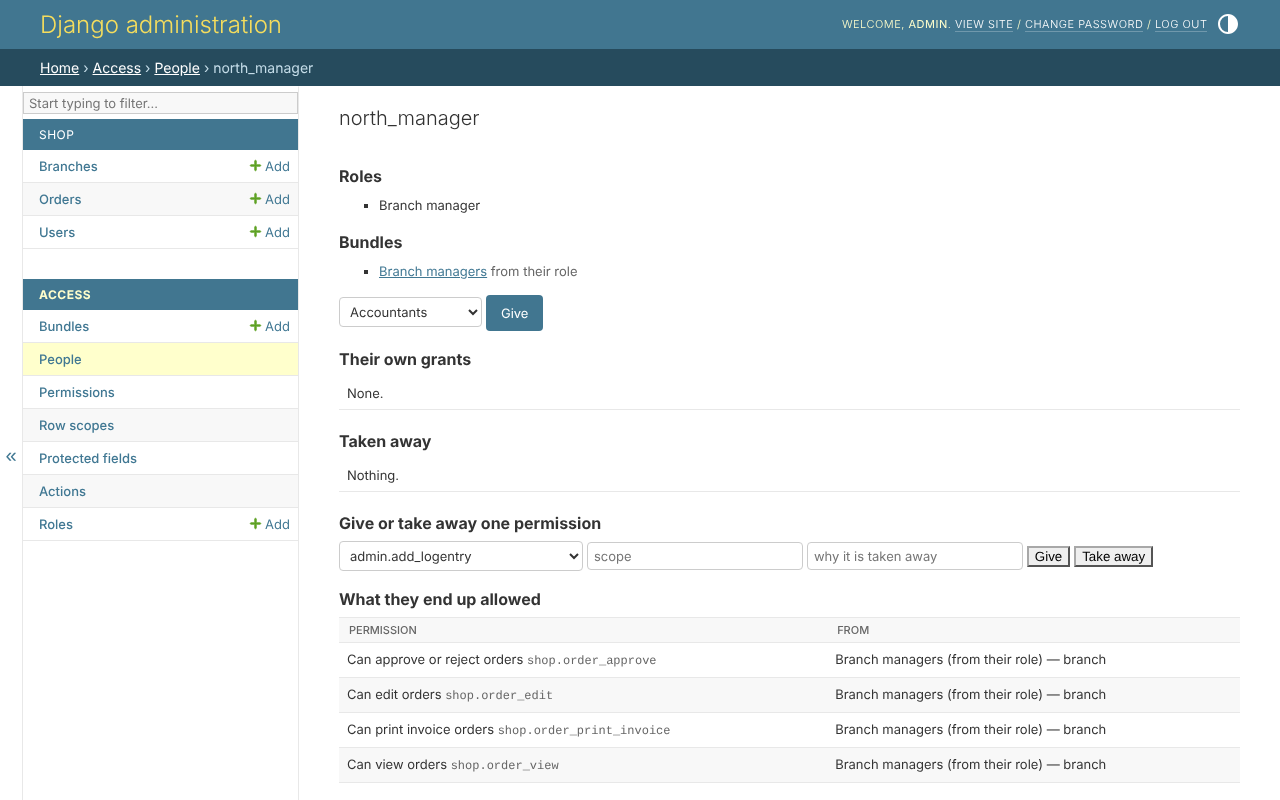
From this page, a bundle is given, and one permission is given or taken away from one person, whatever their bundles say, with the reason it was taken.
In code
The pages call AccessService; so can a project:
from clearance.services import AccessService

access = AccessService(actor=request.user)

managers = access.create_bundle(
    'Branch managers',
    grants={'shop.order_view': 'branch', 'shop.order_edit': 'branch'},
)
access.give_bundle(person, managers)
access.revoke(person, 'shop.order_edit', reason='Under review')
Whoever makes a change may not give more than they hold, nor change their own access: the actor is asked every time.