Bundles
A bundle is Django's Group: permissions given together, each with a
scope - which rows it reaches. Access, Bundles lists them, with how
many permissions each holds and how many people:
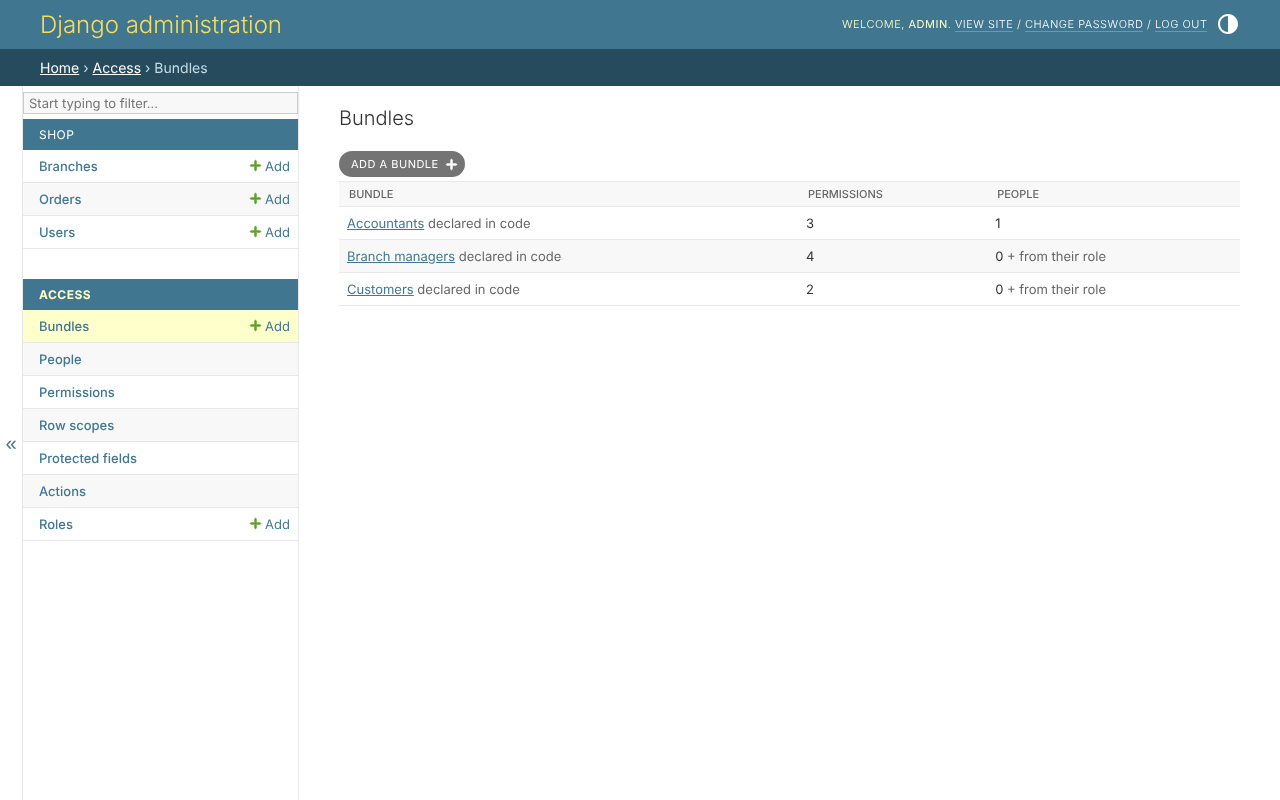
A bundle a role starts people with is marked from their role - its people are named on its own page.
Making one
Add a bundle: a name, and the grid.
The grid has a model in each row and an action in each column - view, create, edit, delete. Tick a permission, and choose its scope beside it:
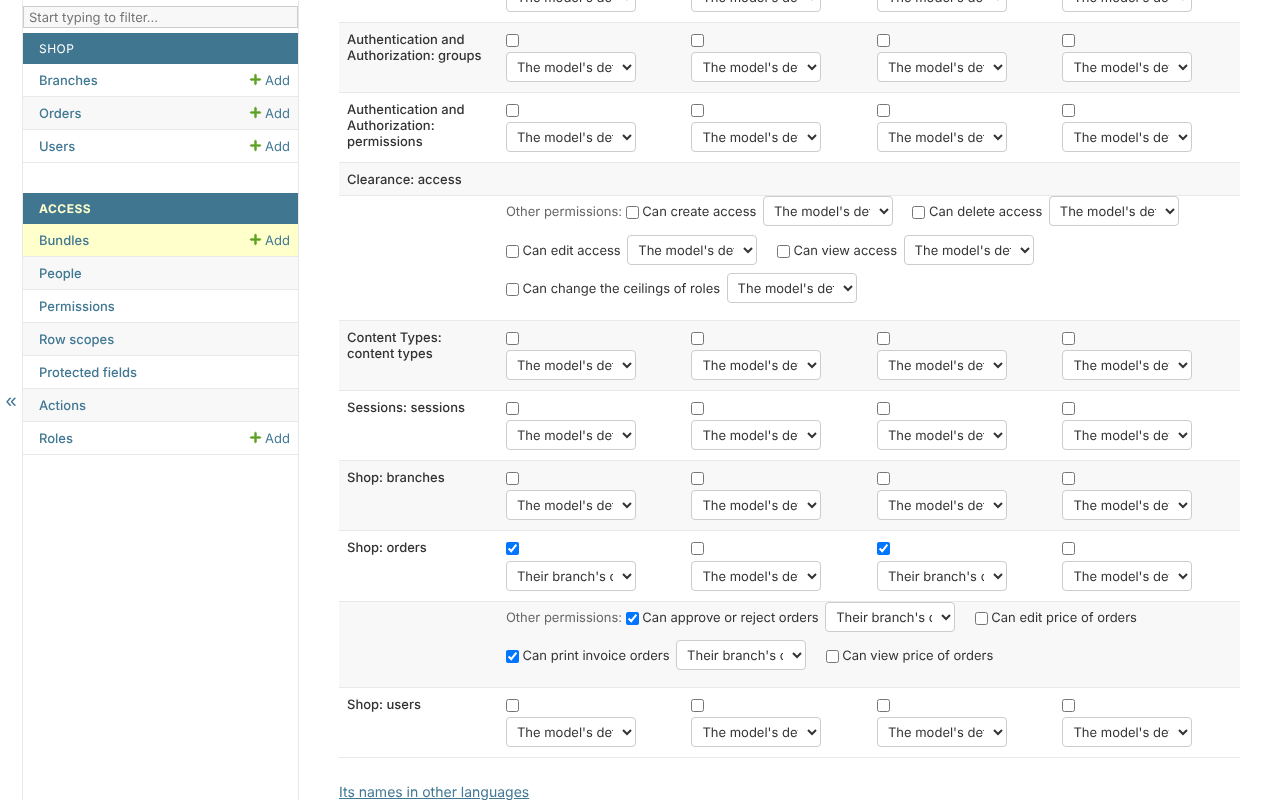
- The scope offers all, the model's scopes in code - Their branch's orders, Their own orders - and the rule scopes built for it. The model's default is what the model reaches with no scope, which is no rows on a model whose queryset names no default.
- Other permissions - an action beyond the four, a protected field's two permissions, an action found in the code - are on a line of their own, under the model's four, each with its own scope.
- A model whose permissions are Django's -
view_branch,add_branch- is in the same grid, under the same four columns.
Below the grid, Held by names everybody who holds the bundle: the people given it, then the people who start with it by their role, marked from their role.
Giving it
A bundle is given on a person's page, or by a role to everybody who has it.
Changing and deleting
Saving the grid changes what everybody holding the bundle may do, at once.
Deleting it says first whom it takes from - including those who start with
it by their role. A bundle declared in the ACCESS file is shown read only,
with no Save and no Delete.
What is refused
- putting in a permission you do not hold, or with a wider scope than you hold it with - unless you hold it with all;
- changing a bundle you hold yourself;
- a change after which nobody but the superuser could manage access.
See the safety rules.