Your own models
Nothing about access is written in a ModelAdmin. The shop's is what Django
documents, and no more:
"""
The shop in the admin site. Nothing about access is written here: every page
asks the order's policy, hides the price from whoever may not read it, and
offers only the status values the person may write.
"""

from django.contrib import admin
from django.contrib.auth.admin import UserAdmin

from shop.models import Branch, Order, Person


@admin.register(Order)
class OrderAdmin(admin.ModelAdmin):
    list_display = ('item', 'branch', 'customer', 'status', 'price')
    list_filter = ('status', 'branch')


admin.site.register(Branch)


@admin.register(Person)
class PersonAdmin(UserAdmin):
    fieldsets = (*UserAdmin.fieldsets, ('Branch', {'fields': ('branch',)}))
The library's admin site gives every ModelAdmin it registers, and every
inline of one, the rules - so each page of each model answers the same
questions the API and the views do.
Who may open it
has_view_permission, has_add_permission and the rest ask the model's
policy - with the row, when there is one. A person sees in the menu only the
models they may do something with: north_manager sees Orders, and not
Branches or Users.
Which rows
The list, and every row opened, come from the rows the person reaches.
Signed in as north_manager, the list of orders holds North's two:
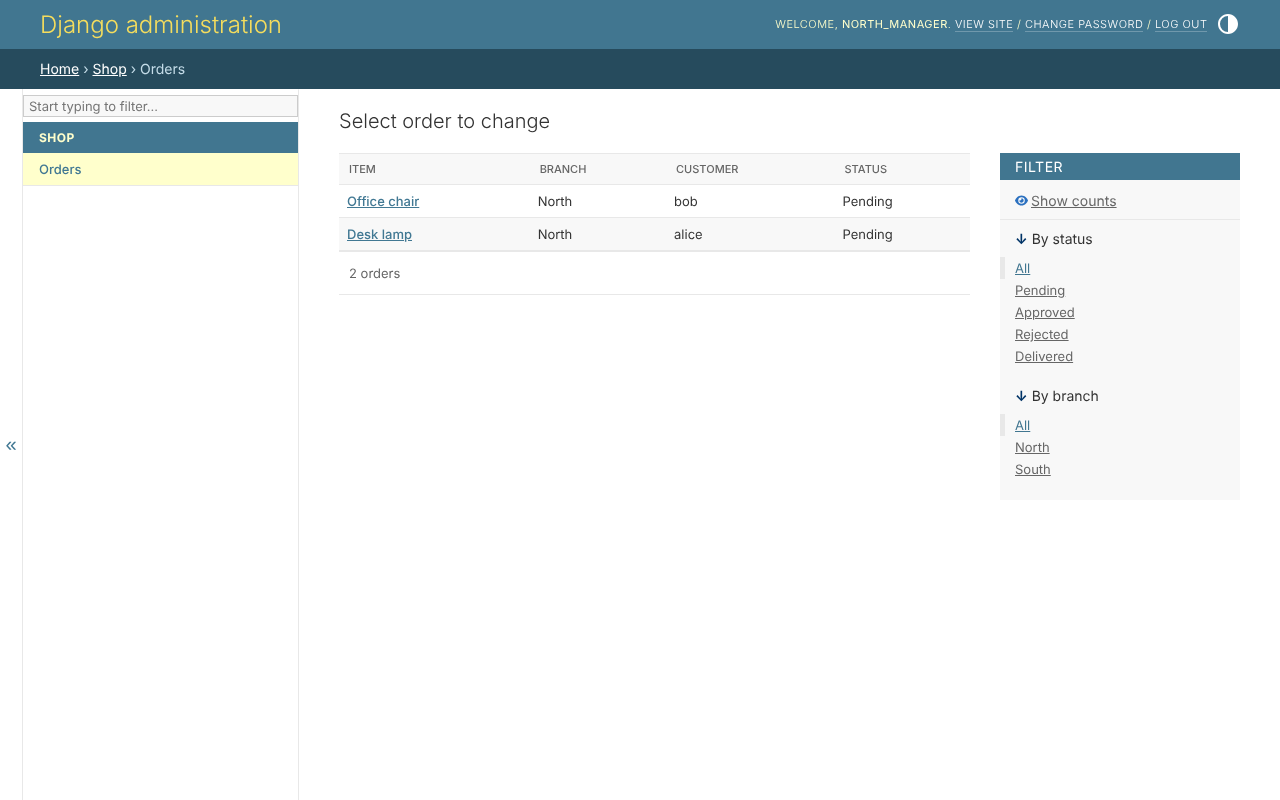
An order of South does not exist for them: its address answers as for an order never placed.
Which fields
A protected field the person may not read is left out of the form, the list,
the search, the filters and the ordering - searching or sorting by it would
tell what it holds. The same order, opened by north_manager and by the
accountant:
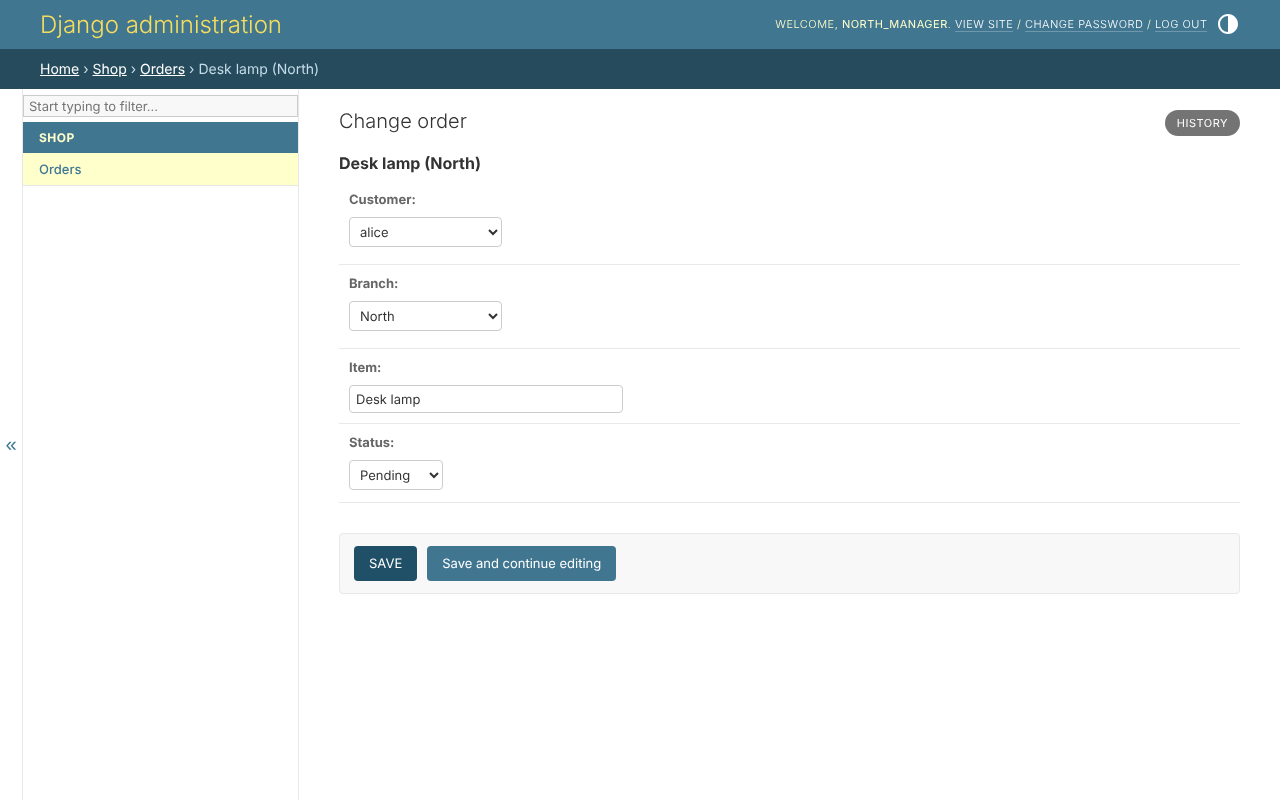
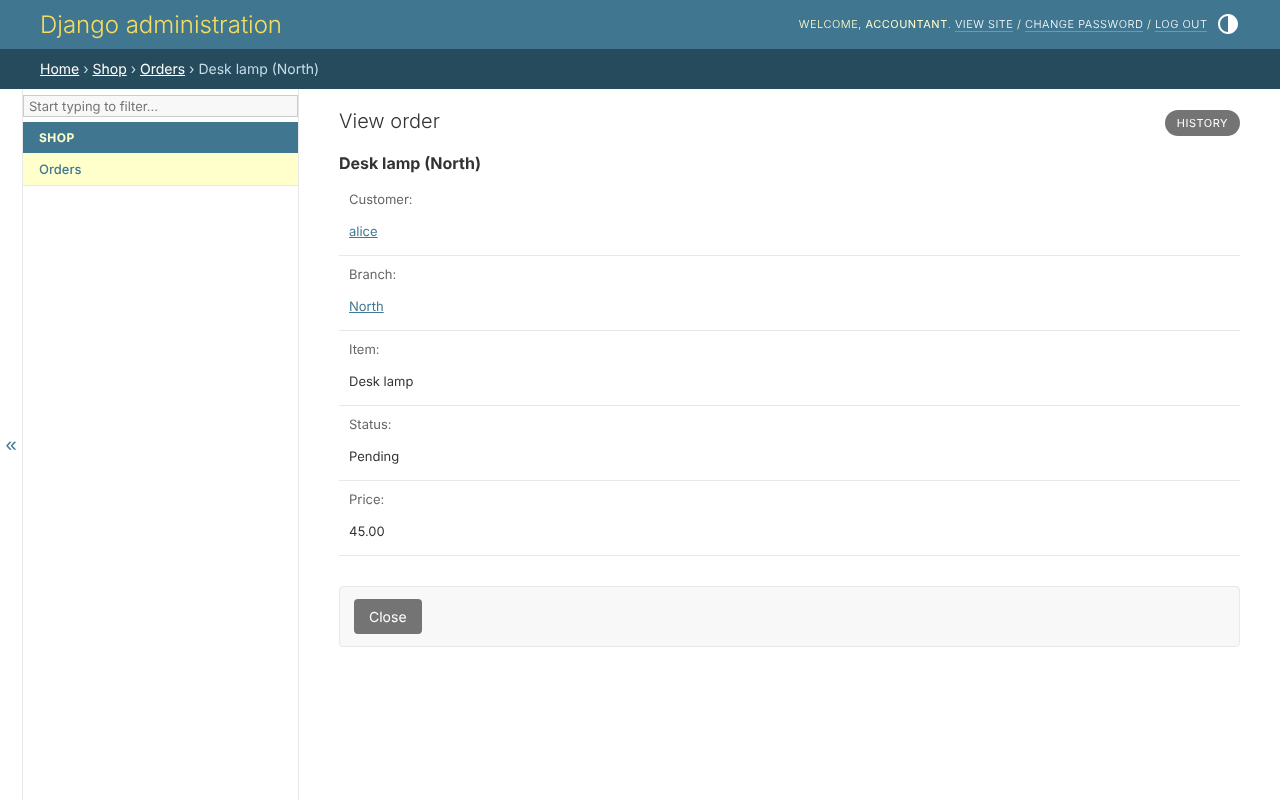
The manager may edit the order and may not read the price, so the form has
no price. The accountant may read the price and edit nothing, so the page is
read only and shows it. A field read but not written is locked, in the form
and in list_editable.
Which values
A field a status action writes offers only the values the person may set. On
a pending order of their branch, north_manager is offered all four
statuses: approved and rejected because they may approve, pending and
delivered because they may edit. Somebody who may edit and not approve is
offered pending and delivered - and the value the order holds already,
since keeping it is no change.
Which admin actions
An admin action the project wrote is offered only to whoever holds its
permission, and runs only over the selected rows its scope reaches. One
naming Django's permissions= is Django's to offer. Delete selected runs
over the rows the person may delete.
What is written
A row added or changed must stay among the rows the person may write: a manager cannot move an order to another branch, out of their reach. A delete that would take, by a cascade, a row the person may not delete is refused. An inline and the editable list show the rows the person may view: one they may not edit is locked there, and one they may not delete is kept.
The user model
On the user's page, a person's groups and permissions are read only: they are changed on the people page, under the safety rules. So is a field the role resolver reads roles from. Only the superuser makes somebody a superuser, and only the superuser changes a superuser's account - its password included, because whoever sets it signs in as them. Django's own group page is taken away: a bundle is a group, and that page wrote round every rule.